



GRS Recycled Fabric
GRS Recycled Fabric refers to textile fabrics made from GRS (Global Recycled Standard) certified recycled materials, such as recycled polyester (rPET) or recycled nylon.
12/31/20252 min read
GRS Recycled Fabric: A Complete Guide
Sustainable Fabric Solutions for the Apparel Industry
I. What Is GRS Recycled Fabric?
GRS Recycled Fabric refers to textile fabrics made from GRS (Global Recycled Standard) certified recycled materials, such as recycled polyester (rPET) or recycled nylon.
The GRS certification system ensures not only the recycled content of the raw material, but also full supply-chain traceability, responsible production processes, chemical management, environmental compliance, and social responsibility.
Common recycled material sources include:
Recycled PET bottles (Plastic bottles → rPET fibers)
Recycled textile waste
Industrial plastic waste
👉 GRS is more than just “recycled.”
Only fabrics that meet strict requirements for recycled content percentage, audited production processes, and documented traceability can be labeled as GRS certified fabrics.
II. Main Apparel Applications of GRS Recycled Fabric
Casual & Everyday Apparel
T-shirts, shirts, dresses, and casual trousers
Maintains fabric appearance and performance while supporting sustainability goals
Sportswear & Functional Apparel
Activewear, yoga wear, quick-dry garments
Recycled polyester offers good strength, durability, and fast-drying performance
Outdoor & Light Performance Apparel
Windbreakers, softshell jackets, lightweight outerwear
Often combined with water-repellent, windproof, or UV-protection finishes
Uniforms & Corporate Apparel
Workwear, school uniforms, branded uniforms
Balances durability, cost control, and ESG requirements
Sustainable & Eco-Conscious Apparel Collections
Capsule collections and environmentally themed garments
Particularly suitable for European and North American markets
III. Suitable Processing Techniques & Technical Characteristics
Mature Spinning & Weaving Processes
Can be produced as FDY, DTY, ATY yarns
Suitable for both knitting and weaving structures
Disperse Dyeing Compatibility
Dyeing systems are similar to virgin polyester
Requires stricter color consistency and batch control
Excellent Compatibility with Functional Finishes
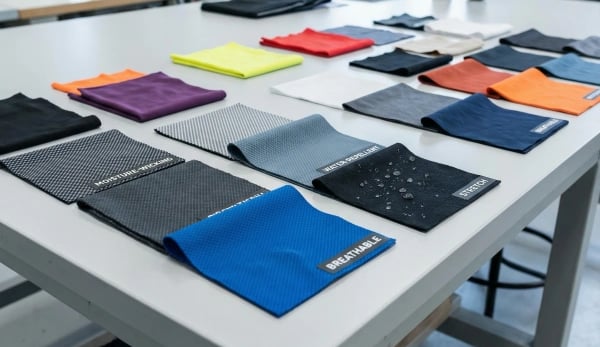
Water-repellent, anti-static, moisture-wicking, stain-resistant finishes
Widely used in sports and outdoor apparel fabrics
Heat-Setting & Dimensional Stability
Recycled fibers require more precise heat-setting control
Improves garment shape retention and stability
Strict GRS Certification & Documentation Requirements
Complete documentation is required from yarn to finished fabric
Best suited for experienced, export-oriented apparel supply chains
IV. Key Advantages of GRS Recycled Fabric
Strong Sustainability & Environmental Value
Reduces reliance on virgin petrochemical resources
Helps lower carbon emissions and plastic waste
Performance Comparable to Virgin Polyester
Good strength, abrasion resistance, and wrinkle recovery
Meets International Brand & Regulatory Standards
Widely accepted by global apparel brands
Supports ESG and sustainability compliance
Suitable for Mass Apparel Production
Mature processing technology and stable quality for bulk orders
Enhances Brand Image & Product Value
Helps brands communicate credible sustainability stories
V. Limitations of GRS Recycled Fabric
Higher Cost Compared to Conventional Polyester
Certification, auditing, and traceability increase overall costs
Higher Production & Management Requirements
Requires strict documentation and supply-chain coordination
Stricter Batch Consistency Control
Variations in recycled feedstock require careful quality management
Market Confusion Around “Greenwashing”
Non-certified recycled fabrics may mislead buyers
GRS certification provides verified credibility
Not Biodegradable by Nature
Still a synthetic fiber; best used in appropriate apparel applications
VI. Typical Apparel Applications Summary
Casual Wear
– T-shirts, shirts, dresses, casual trousers
Sportswear
– Activewear, yoga wear, quick-dry tops
Outdoor Apparel
– Windbreakers, lightweight jackets, softshells
Uniforms
– Workwear, school uniforms, corporate apparel
Sustainable Collections
– Eco-focused apparel lines, capsule collections
Contact
Address
No. 4101, West Ring 2nd Road, Shengze Town, Wujiang District,
Suzhou, Jiangsu Province, China
Postal Code: 215228
Email:
Howard Delaney:+86 139 1851 7843
© 2025. All rights reserved.
Jerry:+86 135 3545 7198